
Virginia Felony Records
Virginia felony records are public court documents maintained by Circuit Court Clerks across the state's 95 counties and 39 independent cities. These records cover the full life of a criminal case, from the initial felony charge through grand jury indictment, trial, and final disposition. You can search them in person at the courthouse, by mail, or through online tools depending on the jurisdiction. This guide covers where to find felony records in Virginia, how the court system handles felony cases, and what you can expect to find in those files.
Virginia Felony Records Overview
Where Virginia Felony Records Are Kept
The Virginia Judicial System manages court records at the local level through each Circuit Court Clerk's office. That clerk is a constitutional officer, elected by the voters of the county or city for a six-year term. They keep the official record of every criminal case filed in their court. That means felony records in Virginia are spread across more than 120 separate clerks' offices, not held in one central place. If you want to find a case, you need to know which court handled it, then contact that court directly.
Each Circuit Court Clerk maintains case files that include the original charging documents, indictment records, motions, court orders, judgment and order books, and sentencing documents. Some clerks now offer online search tools or allow requests by email. Others still require an in-person visit or a written mail request. Hours vary, too. Most offices are open Monday through Friday, but closing times range from 3:45 PM in some smaller jurisdictions to 5:00 PM in others. Call first before you make the trip.
Copy fees follow Virginia statute. Standard copies cost $0.50 per page. Certified copies carry an extra fee, typically around $2.00 per document. You will need to provide the defendant's full name, case number if known, and approximate date of the proceedings. Valid photo ID is required for in-person requests.
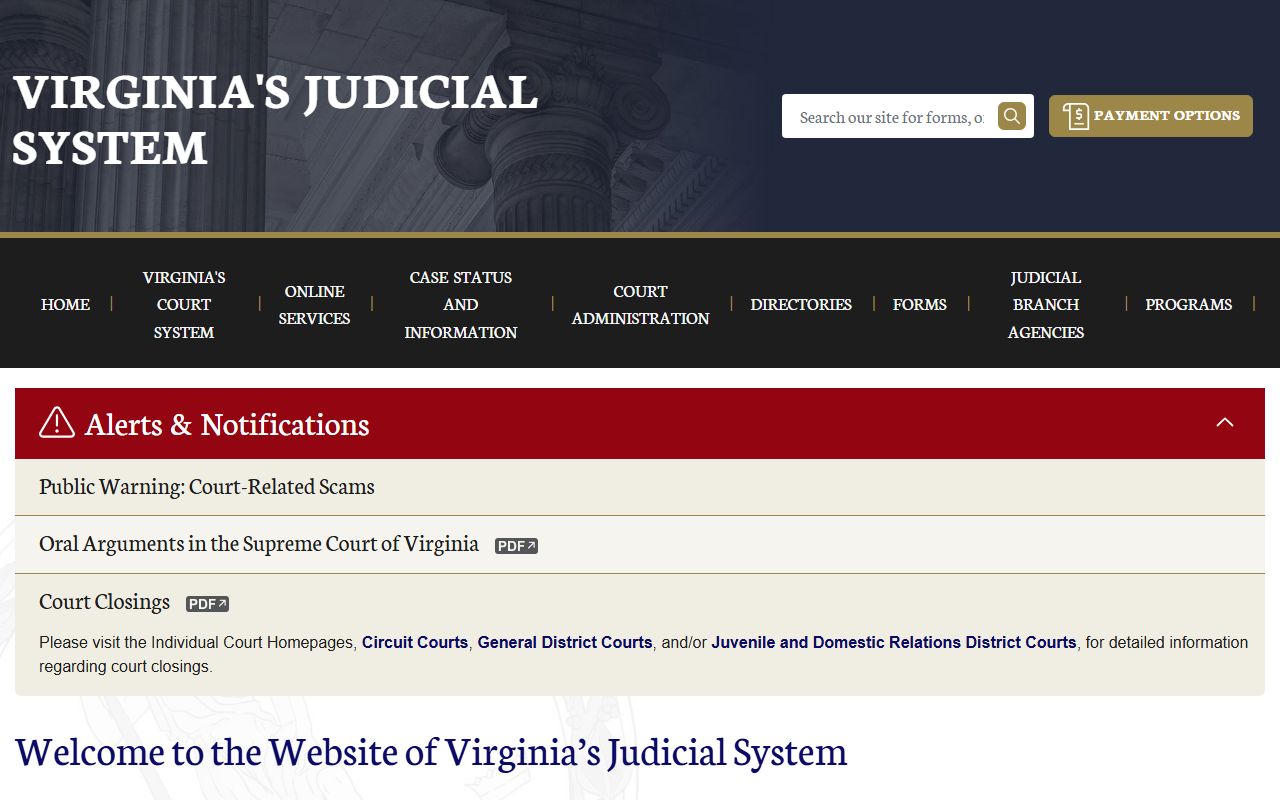
The Virginia Judicial System website at vacourts.gov is the main hub for finding court contact information, local rules, and online services across the Commonwealth.
Virginia Circuit Courts and Felony Cases
All felony trials in Virginia happen in Circuit Court. These are the trial courts of general jurisdiction, which means they have the power to hear any type of case, including the most serious criminal matters. Only Circuit Courts can hold jury trials for felony charges. Every county and independent city in Virginia has its own Circuit Court, and those courts are grouped into 31 judicial circuits. A single circuit may cover one county, or it may span several counties and cities.
The Virginia Circuit Courts portal lists all active circuit court jurisdictions with links to their individual homepages. Each homepage shows the clerk's contact information, office hours, local rules, and court schedules. You can find term dates, grand jury meeting schedules, and motion day calendars for each court. This is the best starting point when you need to locate a specific court or learn about their record request process before you reach out.
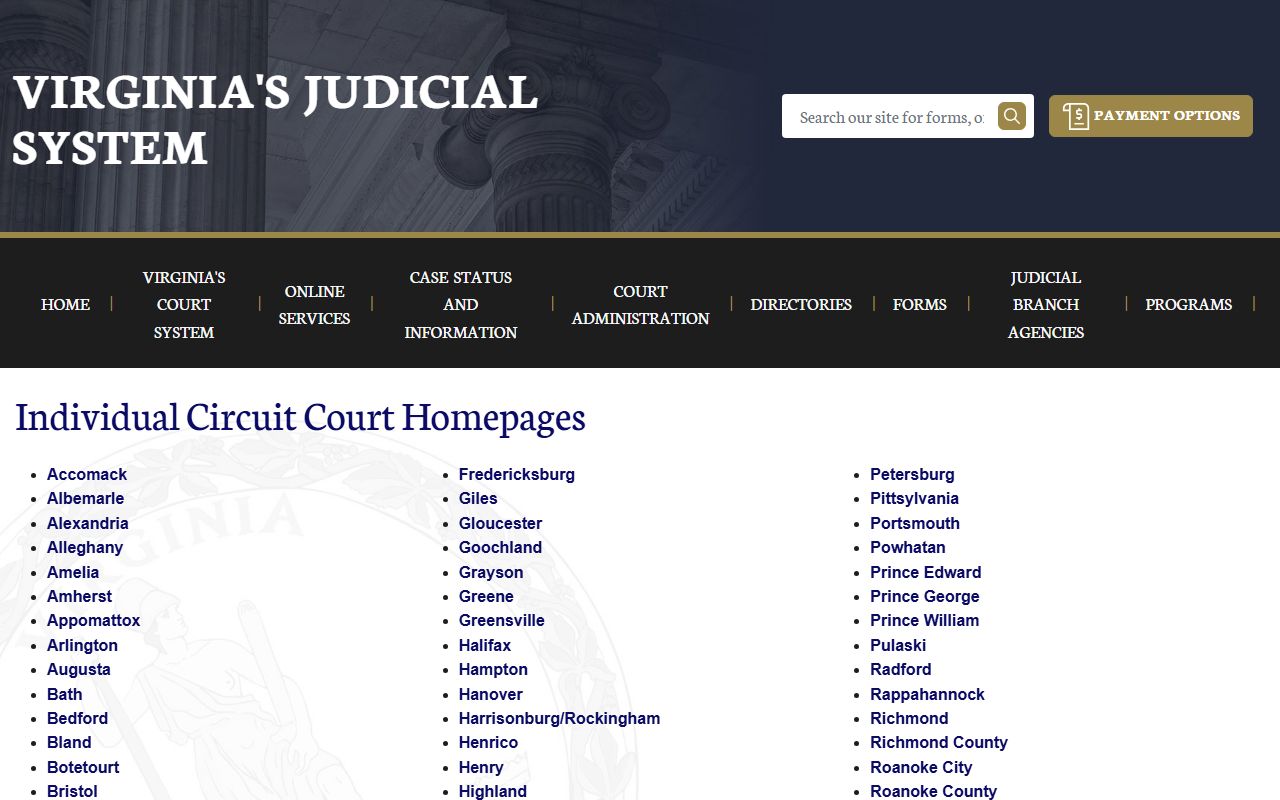
The Circuit Courts portal at vacourts.gov provides direct links to all 120 plus circuit court jurisdictions in Virginia, including contact details and court schedules.
Records held by Circuit Courts include criminal case files, grand jury indictments, arraignment records, trial transcripts, judgment orders, sentencing documents, probation violation proceedings, and appeal records. Older cases may be stored off-site, which can add time to your request. For cases within the past several years, most clerks can locate records the same day you visit.
Note: Circuit Court Clerks are elected constitutional officers serving six-year terms, so the person you deal with may change over time but the office and its records remain continuous.
How Felony Cases Begin in General District Court
Before a felony case reaches Circuit Court, it usually passes through a General District Court preliminary hearing. The General District Court does not try felonies. It holds preliminary hearings to decide whether there is enough evidence to send the case to a grand jury. The standard at this stage is probable cause, which is a much lower bar than what is needed at trial. If the judge finds probable cause, the case moves forward to the Grand Jury for formal indictment.
Under Virginia Code Title 19.2, specifically Section 19.2-218, defendants have the right to a preliminary hearing in most felony cases. The General District Court keeps records of these proceedings, including the charging documents, hearing outcome, and bond conditions. These records are separate from the Circuit Court file, so if you need early-stage case information, you may need to contact both courts.
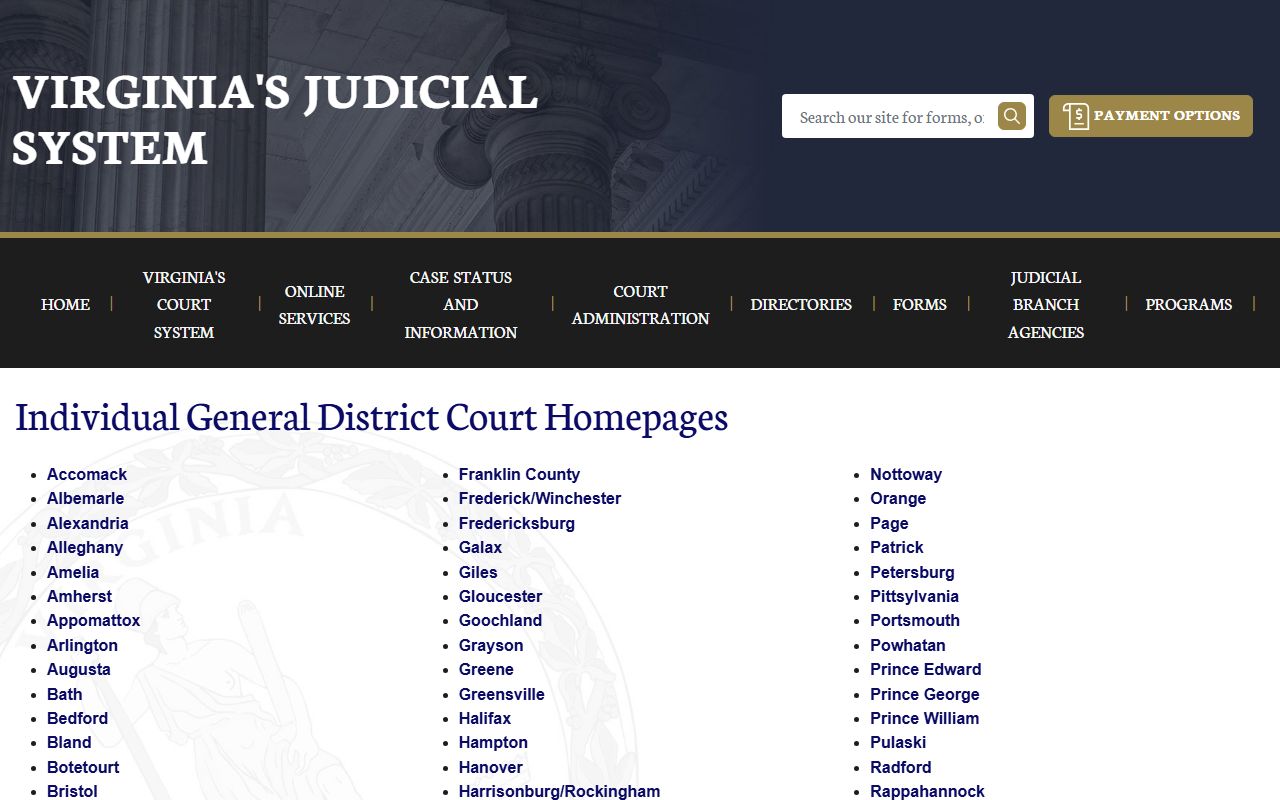
The General District Courts portal at vacourts.gov links to all district court homepages across Virginia, where you can find schedules for preliminary felony hearings and contact information for each court.
Virginia Felony Classes and What They Mean
Virginia uses a six-class system for felony offenses, set out in Virginia Code Title 18.2. Section 18.2-10 defines the punishment range for each class. The class tells you how serious the crime is and what sentence a judge or jury can impose. Class 1 is the most severe, carrying death or life in prison. Class 6 is the least severe felony, though it still results in a state criminal conviction. Understanding the class helps you make sense of what you find in a felony case record.
Class 5 and Class 6 felonies are sometimes called "wobbler" offenses because the court has the option to punish them as either a felony or a misdemeanor, depending on the facts. A conviction as a misdemeanor under these classes carries no more than 12 months in jail and a fine up to $2,500. A felony conviction under Class 6 can mean 1 to 5 years in prison. The sentencing order in the court file will show which way the judge went.
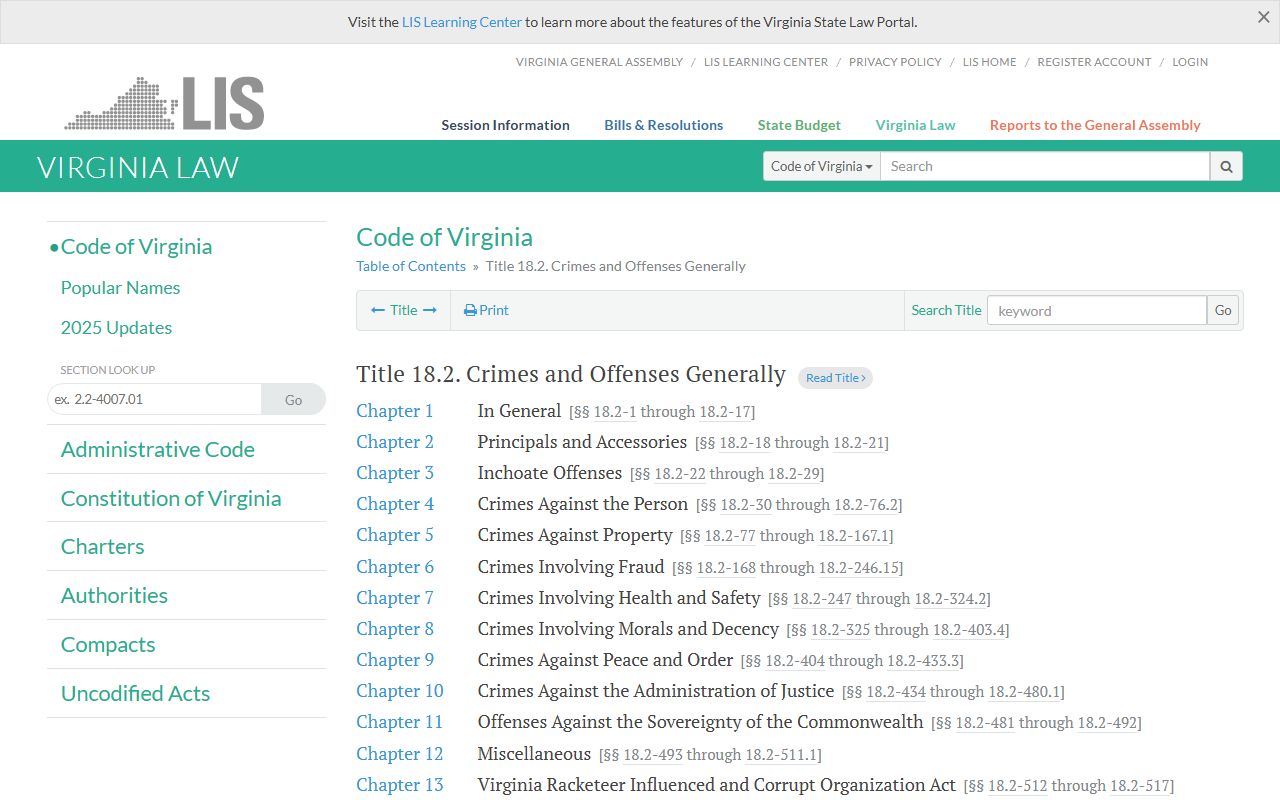
Virginia Code Title 18.2 at law.lis.virginia.gov contains the full list of criminal offenses, felony classes, and penalty ranges that apply across the Commonwealth.
The six felony classes in Virginia carry the following base prison ranges:
- Class 1: Death or life imprisonment, fine up to $100,000
- Class 2: 20 years to life, fine up to $100,000
- Class 3: 5 to 20 years, fine up to $100,000
- Class 4: 2 to 10 years, fine up to $100,000
- Class 5: 1 to 10 years or misdemeanor, fine up to $2,500
- Class 6: 1 to 5 years or misdemeanor, fine up to $2,500
Criminal Procedure and Accessing Felony Records
The rules for how Virginia handles felony cases from arrest through appeal are in Title 19.2 of the Virginia Code. This body of law sets time limits for bringing defendants to trial, defines what records are kept and by whom, and governs who can access those records. Section 19.2-389 controls the dissemination of criminal history record information, spelling out who can get it and under what conditions. Most court records in Virginia are public, but the criminal history repository held by the Virginia State Police has separate access rules.
Section 19.2-392.2 of the Code covers expungement. Virginia allows expungement of records for charges that were dismissed or resulted in an acquittal. Convictions are generally not eligible unless specific criteria are met. If a record has been expunged, it will not appear in most court searches. The clerk's office can tell you whether a case has been expunged if you have the original case number.
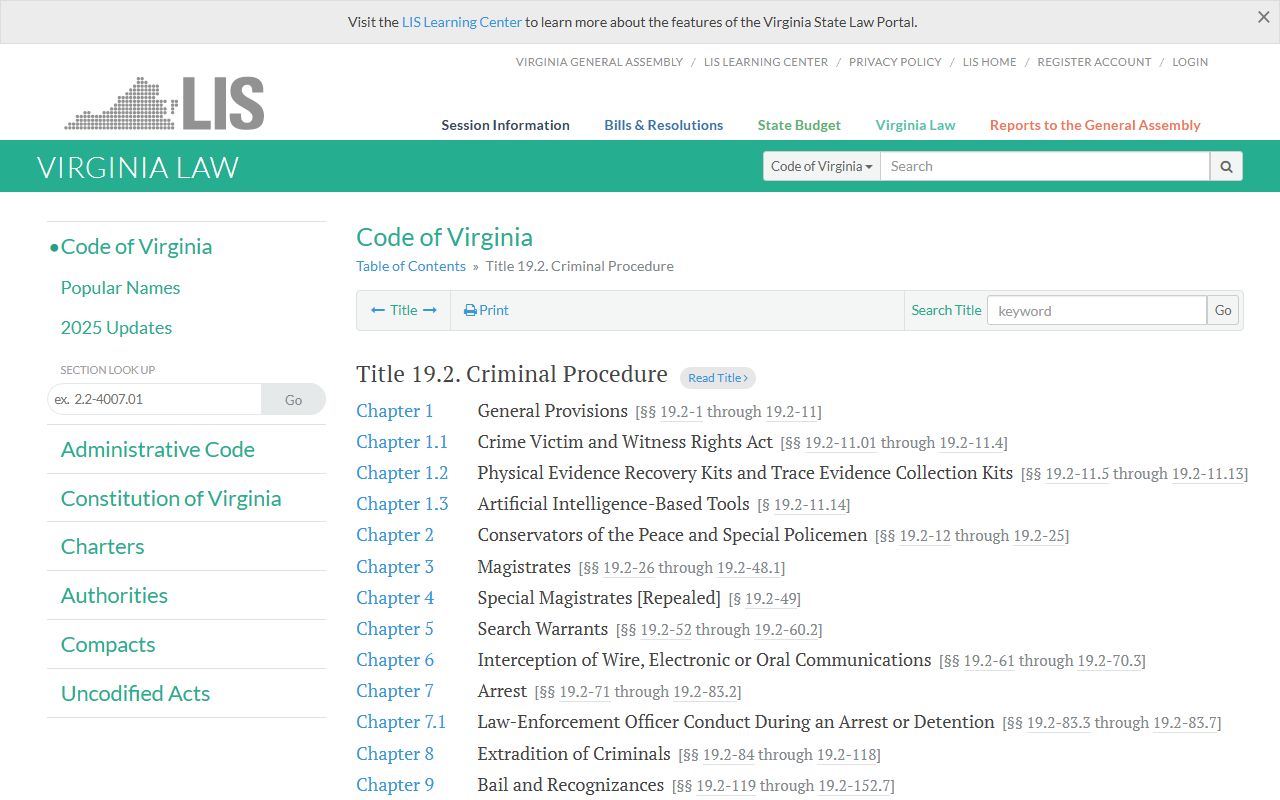
Virginia Code Title 19.2 at law.lis.virginia.gov contains the complete criminal procedure statutes, including rules on preliminary hearings, grand juries, speedy trial rights, and access to criminal records.
Virginia State Police and Criminal History
The Virginia State Police maintains the central criminal history repository for the Commonwealth under Virginia Code Section 19.2-386.1. This is the Virginia Criminal Information Network, known as VCIN. It receives reports of arrests, dispositions, and other felony case outcomes from courts and law enforcement agencies across the state. The VSP also runs the Virginia Sex Offender and Crimes Against Minors Registry, which is a searchable public database of individuals convicted of qualifying felony sex offenses. You can search that registry by name, address, or ZIP code to find registered offenders in a specific area.
The VADOC Offender Locator at vadoc.virginia.gov is another resource for felony convictions that resulted in state prison sentences. It shows current and recently released inmates including their conviction offense, sentence length, and projected release date. This tool covers those serving time in state correctional facilities but does not include people held in local jails for shorter sentences.
The Virginia State Police website at vsp.virginia.gov provides access to the sex offender registry, public safety resources, and information about the state criminal history system.
Virginia Felony Law and the General Assembly
Virginia felony law is set by the Virginia General Assembly, the state legislature. When the Assembly amends criminal statutes or creates new felony offenses, those changes affect what is prosecuted, how records are classified, and what penalties courts can impose. The full Code of Virginia is searchable at the Legislative Information System. You can look up any criminal statute, review the penalty for a specific offense, or track changes to the law over time. This matters for felony record research because older convictions were governed by the law as it stood at the time of sentencing, not the current version.
Note: Felony convictions carry collateral consequences in Virginia including loss of voting rights, restrictions on firearm possession, and potential impacts on professional licensing.
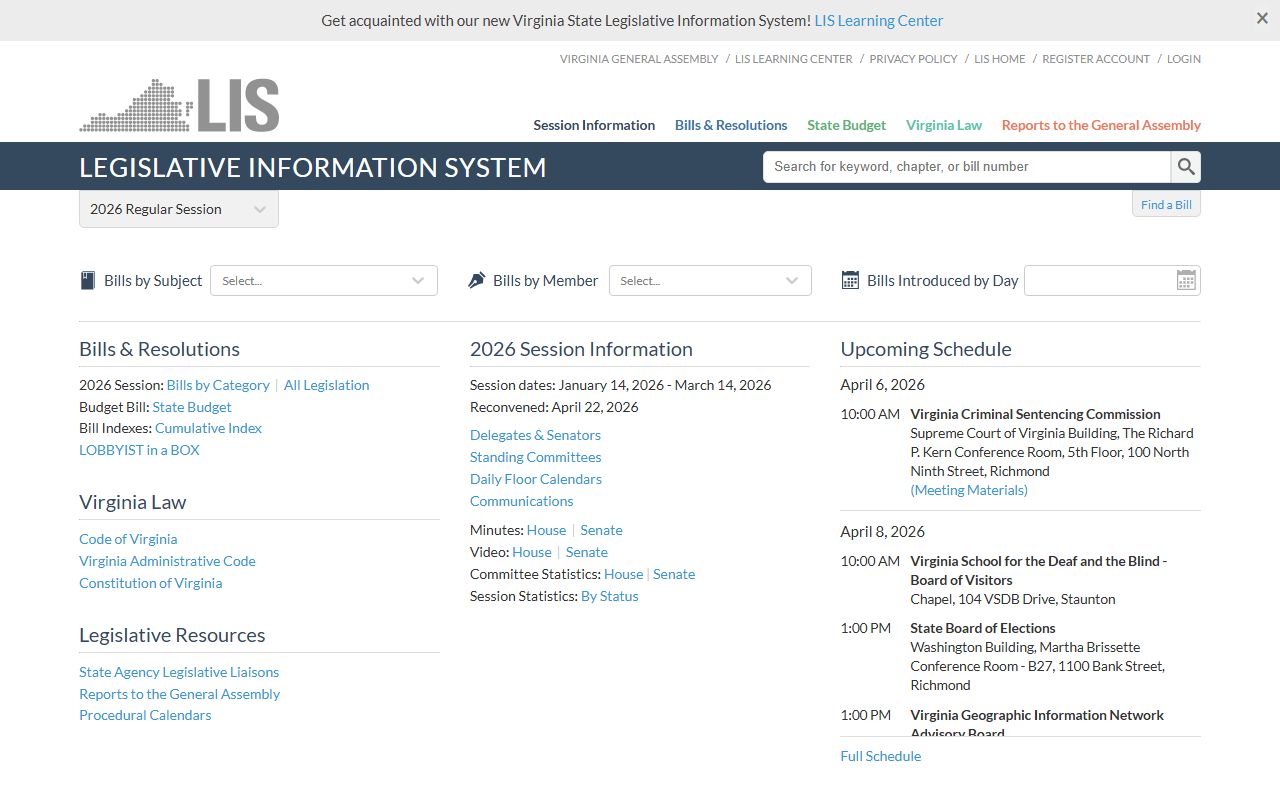
The Virginia General Assembly's Legislative Information System at lis.virginia.gov provides the full searchable Code of Virginia, including all criminal offense statutes and felony classifications.
Virginia State Law Library Research Tools
The Virginia State Law Library hosts the official online version of the Code of Virginia. It lets you search statutes by title, chapter, or keyword. When you need to understand the exact text of a law cited in a felony case, this is the right place. You can see the current statute, prior versions, and notes on how it has changed. The library also links to court rules, Virginia attorney general opinions, and other official legal resources. Researchers, attorneys, and the general public all use it to look up the law that applies to specific criminal charges and court procedures.
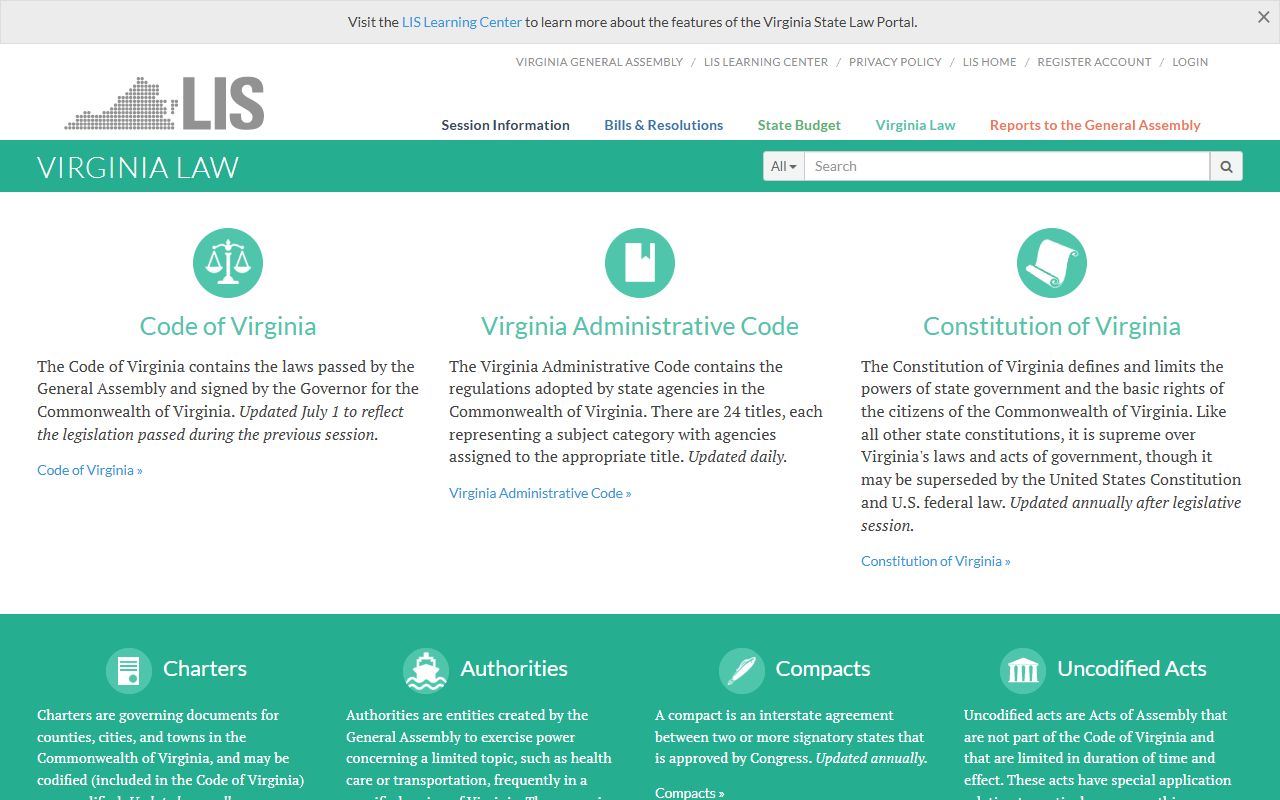
The Virginia State Law Library at law.lis.virginia.gov provides the official searchable text of all Virginia statutes, including the criminal offense and criminal procedure titles that govern felony cases.
The Virginia Supreme Court and Felony Appeals
The Supreme Court of Virginia sits at the top of the state court system. Defendants convicted of felonies in Circuit Court can appeal their cases through this path. The Circuit Court also has oversight from the Supreme Court on how local rules are set and how records are managed statewide. Opinions from the Supreme Court can change how certain felony statutes are interpreted and applied, which matters when you are trying to understand a conviction or an unusual outcome in a case file. Published opinions are available through the court's website and through the state law library.
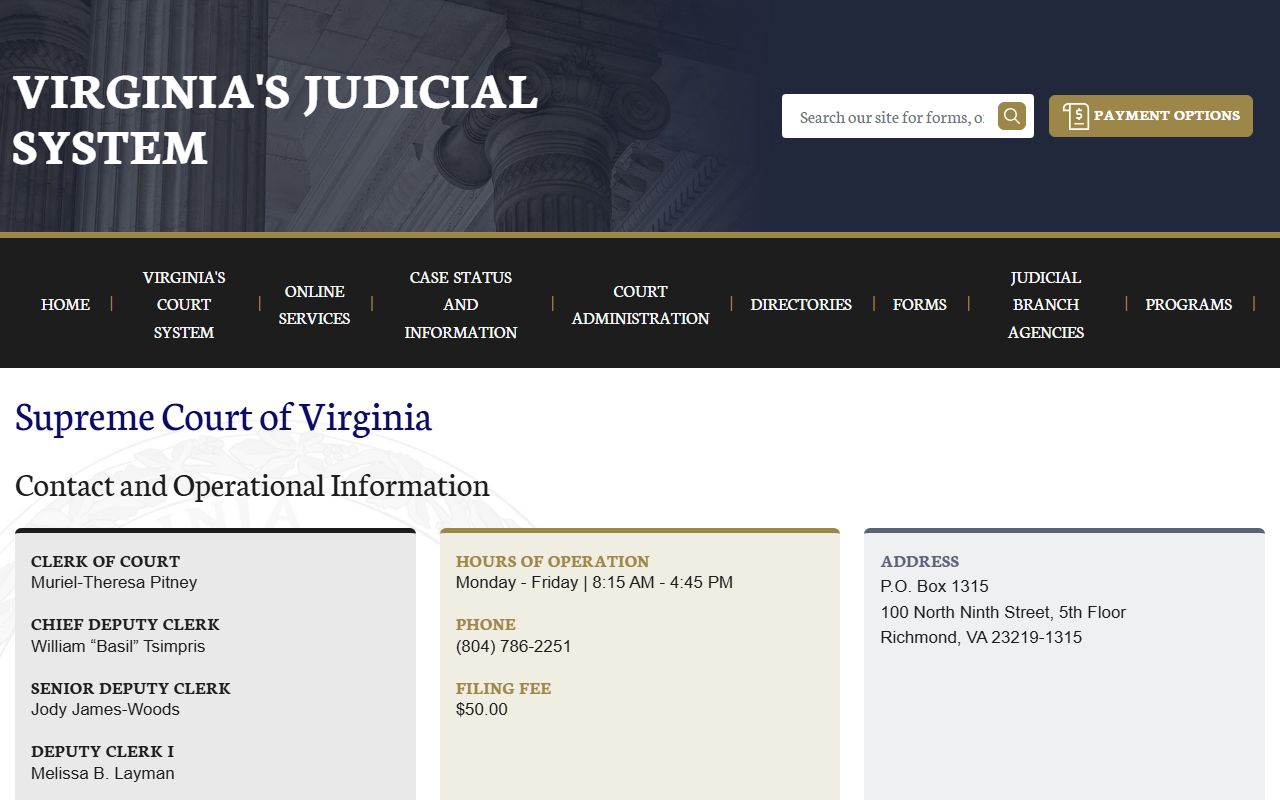
The Supreme Court of Virginia at vacourts.gov publishes opinions and procedural rules that govern how felony appeals and court records are handled throughout the Commonwealth.
Browse Virginia Felony Records by County
Each Virginia county has its own Circuit Court Clerk who maintains felony case records. Select a county below to find contact information, court hours, and resources for felony records in that area.
Felony Records in Major Virginia Cities
Virginia's independent cities each have their own Circuit Court handling felony cases. Pick a city below to find court contact details and local resources for felony records in that area.